Industrial electric motors are the quiet power behind factories, water plants, conveyors, compressors, and automated production lines. But what is an industrial electric motor? It is a machine that converts electrical energy into mechanical motion for demanding, continuous-duty applications. Unlike a small household motor, it is designed to handle heavier loads, longer operating hours, heat, vibration, and challenging industrial environments.
A motor may drive a conveyor belt carrying steel parts, spin a pump through a hot processing area, or control airflow inside a large facility. Its value extends beyond simply producing rotation. Proper motor selection can improve energy efficiency, process stability, workplace reliability, and maintenance planning. Engineers usually examine horsepower, torque, voltage, speed, duty cycle, enclosure type, and environmental conditions before choosing equipment. Standards such as IEC and NEMA also provide useful guidance, although requirements can vary by region and application.
Small details matter. A misaligned shaft can increase vibration. Poor ventilation can shorten insulation life. An undersized motor may overheat during startup. These problems are easy to underestimate, especially when production pressure encourages quick replacements. In my experience, the cheapest motor is not always the least expensive choice over its service life. Still, no motor is perfectly protected from failure. Regular inspections, temperature checks, lubrication control, and electrical testing remain essential. Understanding why industrial motors matter helps plant owners make safer, more informed decisions and avoid costly interruptions. Performance depends on the whole system, not the motor alone.
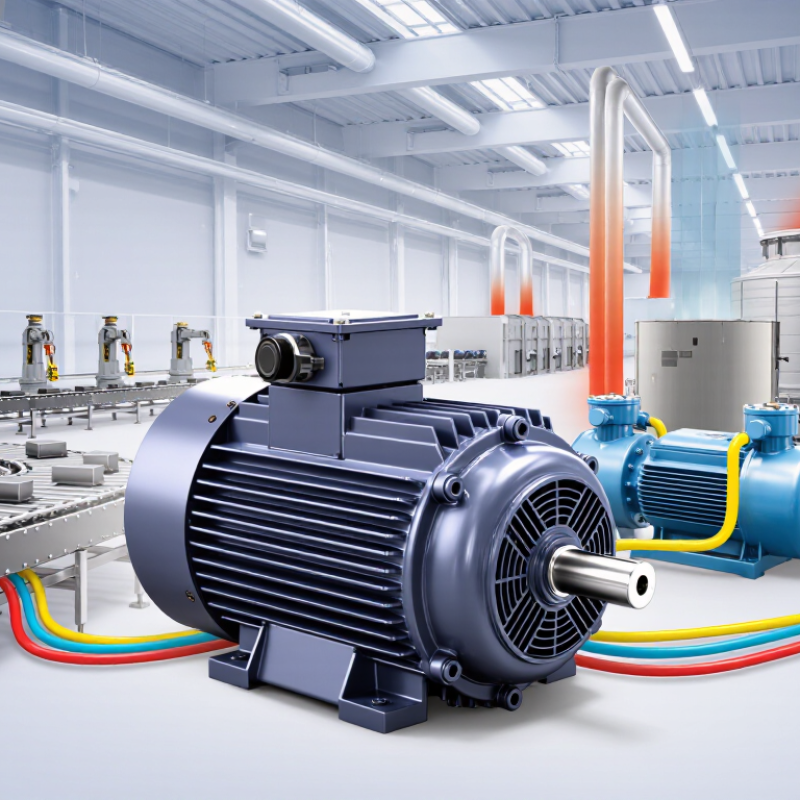
What Is an Industrial Electric Motor? Types, Parts, and Operating Principles
Why Is an Industrial Electric Motor Essential?
An industrial electric motor converts electrical energy into mechanical motion. It drives pumps, compressors, conveyors, fans, mixers, and machine tools. In practice, the motor is often the quiet center of a production line. Its stator creates a rotating magnetic field, while the rotor follows that field and produces torque. Bearings support the shaft, insulation protects the windings, and the housing manages heat and vibration.
Common types include induction, synchronous, permanent-magnet, and brushed DC motors. Induction motors are widely used because they are durable and relatively simple. Synchronous motors maintain precise speed under changing loads. Permanent-magnet designs can deliver high efficiency, but their materials and control systems may increase cost. A variable-frequency drive adjusts voltage and frequency, allowing smoother starting and better speed control.
The numbers explain their importance. The International Energy Agency’s Energy Efficiency 2023 report estimates that electric motors and motor-driven systems consume nearly half of global electricity. The U.S. Department of Energy has also reported that motor systems can represent about 70% of industrial electricity use. Small efficiency gains matter. A poorly aligned coupling, clogged filter, or oversized motor can waste energy every operating hour. I have seen maintenance teams focus on motor efficiency while ignoring the driven load. That approach is incomplete. Real performance depends on sizing, lubrication, power quality, cooling, and operating habits. Even published efficiency figures can mislead when field conditions differ.
Why Motors Matter: They Consume About 45% of Global Electricity (IEA)
Why Is an Industrial Electric Motor Essential?
Industrial electric motors are easy to overlook, yet they drive pumps, fans, compressors, conveyors, and machine tools. According to the International Energy Agency, motors consume about 45% of global electricity. That figure makes motor performance an energy issue, not merely a maintenance concern. Every unnecessary vibration or misaligned coupling can increase power demand.
In plant maintenance work, small details often reveal larger losses. A motor may feel hotter than usual. Its sound may become uneven. These signs can indicate bearing wear, poor lubrication, voltage imbalance, or excessive load. Technicians can use temperature readings, vibration analysis, and current measurements to investigate before failure stops production.
Motor selection also matters. A unit operating far below its useful load may waste energy, while an undersized motor can overheat during demanding cycles. Variable-speed control can reduce consumption in systems that do not need constant output. The savings are not always dramatic. Sometimes the expected improvement is overstated. That deserves honest measurement.
Reliable results require records, not guesses. Comparing electricity use before and after maintenance can show whether a repair worked. The IEA’s estimate highlights the global scale, but each facility needs its own evidence. A clean motor, aligned shaft, and correctly sized drive can turn routine engineering into measurable energy control.
How IEC 60034-30-1 Efficiency Classes IE2–IE5 Reduce Energy Losses
Why Is an Industrial Electric Motor Essential?
How IEC 60034-30-1 Efficiency Classes IE2–IE5 Reduce Energy Losses
Industrial electric motors convert electrical power into motion for pumps, fans, compressors, conveyors, and machine tools. They often run for thousands of hours each year. The International Energy Agency estimates that electric motor systems consume roughly half of global electricity. That makes small efficiency improvements financially significant.
IEC 60034-30-1 classifies motor efficiency from IE2 to IE5. IE2 represents high efficiency, while IE3, IE4, and IE5 indicate progressively lower electrical losses. A higher class reduces heat produced inside windings, bearings, and magnetic circuits. Less heat can also reduce cooling demand. However, the exact saving depends on load, operating hours, voltage, and maintenance.
Consider a 75 kW motor driving a pump continuously. Even a modest efficiency difference can waste several thousand kilowatt-hours annually. The savings become clearer when hundreds of motors operate across one facility. The U.S. Department of Energy’s Motor Systems Market Assessment reports that optimized motor systems can deliver substantial energy reductions through efficient motors, proper sizing, and controls.
Efficiency labels are useful, but they are not magic. An IE4 motor running badly oversized may consume more energy than a correctly selected IE3 motor. Variable-speed operation, alignment, lubrication, and power quality still matter. This is where engineering judgment becomes essential. IEC 60034-30-1 compares motor losses under defined test conditions, not every real factory situation. IE5 may be excellent, yet its higher purchase cost and control requirements deserve careful review.
Why Is an Industrial Electric Motor Essential? - How IEC 60034-30-1 Efficiency Classes IE2–IE5 Reduce Energy Losses
| Efficiency Class |
Typical Efficiency Input
for Comparison |
Motor Output |
Estimated Motor Losses |
Annual Operating Time |
Annual Loss Energy |
Annual Electricity Cost of Losses |
Annual Loss-Cost Reduction vs IE2 |
IE2
High Efficiency |
91.0% |
15 kW |
1.48 kW |
4,000 hours |
5,934 kWh |
US$712.08 |
— |
IE3
Premium Efficiency |
93.6% |
15 kW |
1.03 kW |
4,000 hours |
4,102 kWh |
US$492.24 |
US$219.84 per year |
IE4
Super-Premium Efficiency |
95.2% |
15 kW |
0.76 kW |
4,000 hours |
3,025 kWh |
US$363.00 |
US$349.08 per year |
IE5
Ultra-Premium Efficiency |
96.5% |
15 kW |
0.54 kW |
4,000 hours |
2,176 kWh |
US$261.12 |
US$450.96 per year |
Calculation basis: The comparison uses a constant 15 kW mechanical output, 4,000 operating hours per year, and an electricity price of US$0.12 per kWh. Motor losses are calculated as
Output × (1 ÷ Efficiency − 1). The efficiency percentages are representative comparison inputs rather than universal minimum values; actual IEC 60034-30-1 limits depend on rated power, number of poles, frequency, and the applicable edition of the standard. IE5 availability and classification should be verified for the specific motor type and application.
Where Motors Work: Pumps, Fans, Compressors, Conveyors, and Machine Tools
Why Is an Industrial Electric Motor Essential?
Where Motors Work: Pumps, Fans, Compressors, Conveyors, and Machine Tools
An industrial electric motor turns electrical energy into controlled mechanical motion. In maintenance work, its value appears when production must run steadily for long hours. A motor does not simply spin. It must deliver suitable torque, speed, and protection for its load.
In pump systems, motors drive impellers that move water, chemicals, or process fluids through pipes. Correct sizing prevents overheating and reduces wasted energy. Fans use motors for ventilation, cooling, and dust collection. Small changes in airflow resistance can increase power demand. That detail is easy to miss.
Compressors depend on stable motor output to supply air for tools and process equipment. Frequent starting can stress couplings, bearings, and electrical components. Conveyors need controlled torque to move heavy materials without sudden jerks. Poor alignment may create vibration, noise, and premature belt wear. Machine tools require precise speed control for cutting, drilling, grinding, or shaping metal. Here, accuracy matters as much as power.
Engineers should inspect insulation, lubrication, alignment, and temperature trends. Routine checks can reveal loose connections before downtime occurs. Still, maintenance plans are never perfect. Dust, humidity, changing loads, and human error can defeat a good schedule. Monitoring helps, but it does not replace judgment on the factory floor.
How to Select and Maintain Motors: Power, Duty, Speed, Safety, and Cost
Why Is an Industrial Electric Motor Essential?
How to Select and Maintain Motors: Power, Duty, Speed, Safety, and Cost
An industrial motor converts electrical energy into dependable mechanical movement. In field inspections, I have seen undersized motors overheat beside dusty conveyors. Select power from the real load, not a hopeful estimate. Check starting torque, voltage, current, and the machine’s peak demand. A small reserve helps, but excessive capacity wastes energy and increases purchase cost.
Duty matters every day. Continuous loads need motors rated for long operation. Intermittent machines require careful attention to starts, stops, and cooling time. Speed must match the driven equipment, especially when belts, pumps, or gear systems are involved. A nameplate provides useful evidence, but site conditions can change everything. Ambient heat, altitude, dust, and moisture affect performance.
Safety begins with correct guarding, grounding, overload protection, and isolation procedures. Select suitable enclosure protection for the environment. During maintenance, inspect terminals, bearings, vibration, and unusual odors. Keep cooling passages clean. Simple checks often reveal expensive faults early. I once treated a noisy bearing as harmless; that judgment delayed repairs and increased downtime. Maintenance intervals should follow operating hours and measured condition, not a convenient calendar alone. The cheapest motor can become costly through wasted energy, frequent failures, and difficult replacement access.
FAQS
It converts electrical energy into mechanical motion. The motor drives pumps, fans, compressors, conveyors, and machine tools. It is often the quiet center of production.
The stator creates a rotating magnetic field. The rotor follows that field and produces torque. Bearings support the shaft. Insulation protects the windings. The housing helps control heat and vibration.
Common types include induction, synchronous, permanent-magnet, and brushed DC motors. Induction motors are durable and relatively simple. Synchronous motors maintain accurate speed under changing loads. Permanent-magnet motors can be efficient, but may cost more.
A variable-frequency drive adjusts voltage and frequency. This supports smoother starting and better speed control. It can reduce sudden stress on couplings and bearings. Control settings still require careful adjustment.
Pumps move process fluids through pipes. Fans support ventilation, cooling, and dust collection. Compressors supply air for tools and equipment. Conveyors move heavy materials with controlled torque. Machine tools need precise speed for cutting and grinding.
Oversizing, poor alignment, clogged filters, and changing loads can increase energy use. Airflow resistance may make a fan work harder. A misaligned coupling can create vibration and heat. Efficiency figures may not match real factory conditions.
Inspect insulation, lubrication, alignment, temperature, and electrical connections. Watch for unusual noise or vibration. A loose connection can cause downtime later. Maintenance is never perfect. Dust and humidity can defeat a good schedule.
A correctly sized motor supplies suitable torque without unnecessary energy use. An undersized motor may overheat under heavy loads. An oversized motor can waste electricity during normal operation. The driven load matters too. That part is easy to overlook.
Conclusion
An industrial electric motor is a machine that converts electrical energy into mechanical motion, enabling equipment to perform reliable and continuous work. If you ask, “what is an industrial electric motor,” it can be understood as the driving force behind many industrial systems. Motors include key parts such as the stator, rotor, bearings, shaft, and housing, and they operate through electromagnetic principles. Common types are selected according to speed, torque, power, and application requirements.
Industrial motors are essential because they support pumps, fans, compressors, conveyors, and machine tools, while using a significant share of global electricity. Choosing efficient motors within the IEC 60034-30-1 classes, from IE2 to IE5, can reduce energy losses and operating costs. Proper selection should consider power rating, duty cycle, speed, safety, installation conditions, and total cost. Regular inspection, cleaning, lubrication, alignment, and temperature monitoring help maintain performance, extend service life, and prevent unexpected downtime.

 KPR Motor