In the industrial landscape of China, understanding "what are the different types of industrial motors" is essential. Industrial motors are crucial for machinery and automation. According to a recent report by ResearchAndMarkets, the Chinese industrial motor market is projected to reach $20 billion by 2025, driven by advancements in technology and increased demand in various sectors.
Experts highlight the importance of different motor types. Dr. Helen Zhao, a leading authority on industrial machinery, stated, "Selecting the right motor type can significantly impact productivity and energy efficiency." The market features diverse motor types, including AC motors, DC motors, and stepper motors, each serving unique purposes.
While the options are numerous, businesses often face challenges in choosing the right motor. This can lead to inefficiencies and increased costs. Understanding the specifics of each type not only helps in making informed decisions but also enhances overall operational effectiveness. Companies must reflect on their needs to avoid potential pitfalls in motor selection. Knowledge of motor types is not just beneficial; it is essential for future growth in the industry.
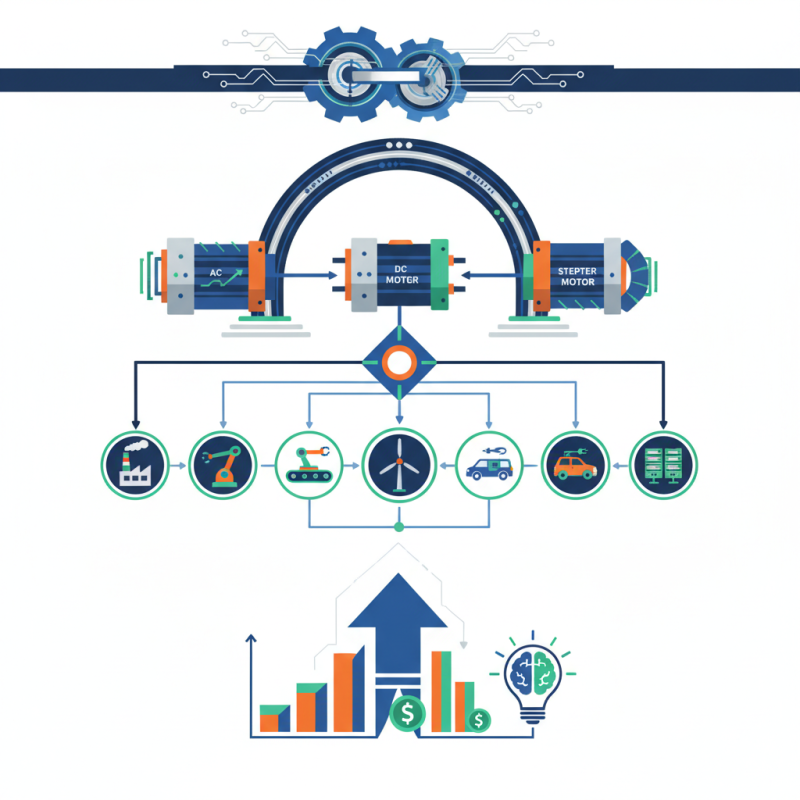
Key Characteristics of Industrial Motors in China
Industrial motors play a pivotal role in China's manufacturing landscape. They are essential in various sectors such as automotive, textiles, and food processing. The key characteristics of these motors define their effectiveness and application. For instance, efficiency ratings are critical. Higher efficiency translates to lower energy costs. Moreover, robustness is vital for handling heavy loads and continuous operation.
Durability remains another significant aspect. Many industrial environments expose motors to dust, moisture, or extreme temperatures. Therefore, the ability to withstand these conditions is crucial. Temperature ratings and protection classes are commonly used to assess durability. Noise and vibration levels also matter, impacting both worker comfort and equipment longevity.
While there are numerous options available, understanding the specific needs of your industry is essential. Many businesses face challenges in selecting the appropriate motor type. It’s easy to overlook the importance of size and power requirements. Investing in a motor that doesn't meet the operational demand can lead to inefficiencies. Continuous evaluation and adaptation to changing industrial needs are necessary for optimal performance.
Types of AC Motors Commonly Used in Industries
AC motors are vital for various industrial applications. These motors are known for their efficiency and durability, making them a popular choice. There are several types of AC motors used in industries today. Understanding each type helps in selecting the right one for specific needs.
Induction motors stand out in industrial settings. They work on the principle of electromagnetic induction and require minimal maintenance. This makes them ideal for continuous operation. Squirrel cage induction motors are commonly used due to their robustness. However, their efficiency can decline under certain load conditions.
Synchronous motors are another type found in industries. These motors operate at a constant speed, offering precision in applications. They require a power supply to maintain synchronization. While more efficient at higher loads, they may not perform well at lower loads. This can lead to inefficiencies. A good understanding of the requirements can prevent such issues.
Types of AC Motors Commonly Used in Industries
This chart displays the types of AC motors used in various industrial applications along with their respective usage percentages. These motors play a crucial role in automation and machinery operations across multiple sectors.
Overview of DC Motors and Their Applications
DC motors are widely used in various applications due to their straightforward design and efficiency. These motors operate on direct current, allowing them to easily control speed and torque. In many household appliances, such as electric fans and toys, DC motors provide reliable performance.
Their simple construction makes them easy to maintain. However, they often require periodic brush replacements. This maintenance aspect can lead to challenges over time. Additionally, when under heavy load, DC motors can become less efficient and generate heat. Proper management is crucial for optimal performance.
In industrial settings, DC motors power conveyor systems and robotics. They can deliver high starting torque, making them suitable for heavy machinery. Understanding the nuances of DC motors helps engineers and technicians optimize their applications. This knowledge fosters innovative solutions and improvements in productivity. Embracing both their strengths and weaknesses is key to maximizing the value of DC motors in the industry.
Emerging Trends in Chinese Industrial Motor Technology
Emerging trends in Chinese industrial motor technology reflect a rapid evolution driven by innovation. Electric motors have gained prominence due to their efficiency and lower environmental impact. Manufacturers are investing heavily in research to develop motors that are more energy-efficient and cost-effective.
One notable trend is the integration of IoT (Internet of Things) into motor technology. This allows real-time monitoring and diagnostics. As a result, businesses can minimize downtime and enhance productivity.
Another advancement is the focus on smart motors. These motors can adapt to varying operational conditions, optimizing performance dynamically.
However, challenges remain. The transition to new technologies requires substantial investment and training. There is also a learning curve associated with the integration of smart systems. While the potential benefits are significant, companies must carefully assess their readiness to embrace these changes in a competitive market.
Factors to Consider When Selecting Industrial Motors in China
Selecting the right industrial motor in China requires careful consideration of several key factors. The application of the motor is crucial. Different industries demand specific motors based on torque, speed, and operating conditions. For instance, motors used in heavy-duty manufacturing settings differ greatly from those in food processing. Understanding your industry’s unique requirements is essential.
Energy efficiency is another vital factor. Industrial motors can consume significant energy over time. Choosing a motor that meets or exceeds energy efficiency standards can lead to substantial cost savings. Additionally, consider the motor's durability and maintenance needs. A robust motor will reduce downtime, enhancing productivity and reducing long-term costs. The environmental impact of the motor is also essential to ponder.
Lastly, think about the availability of technical support and spare parts. In-depth knowledge and reliable service from suppliers can greatly affect operational reliability. Engaging with local experts can help bridge any knowledge gaps. Reflecting on these considerations can guide you to a more informed choice, ultimately benefiting your operations in China.
China Top Types of Industrial Motors You Need to Know
| Motor Type |
Power Range (kW) |
Efficiency Class |
Application |
Key Features |
| AC Induction Motor |
0.75 - 500 |
IE2 - IE4 |
Pumps, Fans, Conveyors |
Durability, Low Maintenance |
| DC Motor |
0.1 - 200 |
N/A |
Robotics, Electric Vehicles |
High Torque, Easy Speed Control |
| Servo Motor |
0.5 - 400 |
IE3 - IE5 |
CNC Machines, Robotics |
Precision Control, High Responsiveness |
| Step Motor |
1 - 100 |
N/A |
3D Printers, Robotics |
Low Cost, Open Loop Control |
| Brushless DC Motor |
0.1 - 300 |
IE3 - IE5 |
Electric Vehicles, Drones |
High Efficiency, Long Life |
FAQS
: Efficiency ratings, robustness, and durability are crucial characteristics. They significantly impact effectiveness and application in various sectors.
Higher efficiency leads to lower energy costs. Motors that consume less energy save money over time.
Motors must handle dust, moisture, and extreme temperatures in industrial settings. This durability is essential for continuous operation.
Noise affects worker comfort. High vibration levels can harm equipment longevity, necessitating considerations during motor selection.
Many businesses struggle to choose the right motor type for their specific needs. Overlooking size and power requirements can lead to inefficiencies.
DC motors require periodic brush replacements. This maintenance can become a challenge and affect operational reliability over time.
Choosing energy-efficient motors helps minimize long-term energy costs. They contribute to improved overall operational efficiency.
Different industries have unique requirements based on torque, speed, and operating conditions. Understanding these needs is vital for performance.
DC motors can become less efficient under heavy loads and generate heat, making management crucial for optimal performance.
Reliable technical support from suppliers ensures operational reliability. Local expertise can help fill knowledge gaps in selection processes.
Conclusion
In exploring the question of what are the different types of industrial motors, it is essential to understand the key characteristics that define industrial motors in China. These motors can be broadly categorized into AC and DC types, each serving distinct applications across various industries. AC motors, such as induction and synchronous motors, are widely recognized for their efficiency and reliability, making them crucial for numerous manufacturing processes. On the other hand, DC motors, renowned for their precise control capabilities, find significant use in applications requiring speed regulation and high torque.
Furthermore, emerging trends in Chinese industrial motor technology are driving innovation, focusing on energy efficiency and smart automation. When selecting industrial motors, factors such as efficiency, load requirements, and environmental considerations must be carefully evaluated to ensure optimal performance. Understanding these aspects allows manufacturers to make informed decisions about which motor types best suit their operational needs.

 KPR Motor