In 2026, choosing an industrial motor is less about buying the largest unit and more about matching it to the work. A pump running steadily in a clean room has different needs from a conveyor starting under a heavy load in a dusty plant. Before comparing prices, buyers should check the driven equipment, load profile, starting frequency, operating hours, and available power supply. Small details matter. A nameplate photo and a week of operating data can reveal problems that a quick catalog search may miss.
So, what should buyers consider before ordering industrial motors? James L. Kirtley Jr., an electrical-machines expert and MIT professor, has emphasized the value of understanding how machines operate. In practical terms, buyers should verify rated output, speed, torque, efficiency, enclosure, insulation, and duty rating against the actual application. They should also confirm mounting dimensions, shaft size, drive compatibility, and service access. A motor that fits electrically but not physically can delay installation.
Ask suppliers about lead times, documentation, spare parts, and support after delivery. Check whether quoted efficiency values match the intended operating conditions, not just a best-case point. Total cost matters. Yet a lowest-price choice can become expensive if it consumes more energy or fails early. There is no perfect checklist. Plant conditions change, and buyers may not have complete data. Record what is known, flag what remains uncertain, and have a qualified engineer review critical applications before ordering.
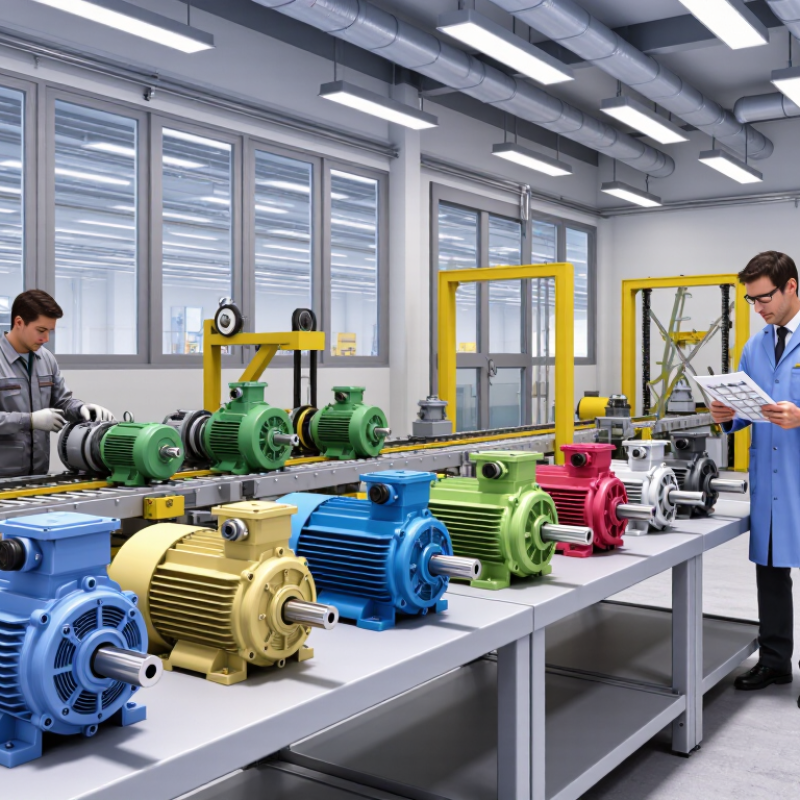
Choosing an industrial motor in 2026 starts with the machine it must drive, not a catalog rating. Record the load type, speed range, starting frequency, and daily operating hours. A conveyor carrying uneven loads behaves differently from a fan running steadily. Small details matter. Note ambient temperature, dust, moisture, washdown exposure, and available mounting space. A motor beside a hot oven or inside a cramped cabinet may need different cooling provisions.
Determine the torque required at startup and during normal operation. Brief peaks can matter even when average demand is modest. Measure the load across a full production cycle when possible; one current reading can mislead. Specify voltage, phase, supply frequency, and control method, including variable-speed operation. Does the equipment need frequent reversals or smooth acceleration? These requirements affect motor selection, protection, and thermal margin. A forecast is still a guess, so record the assumptions and compare them with measured load.
Also consider the cost of stopping the line. If access is difficult, check maintenance clearances and the practical availability of replacement parts. Review the driven equipment’s operating limits before choosing a speed range. Buyers sometimes focus too much on peak power and overlook long periods of partial load. That trade-off deserves a closer look. A short site survey can catch constraints that a specification sheet misses.
| Application | Load and Duty Profile | Speed and Control Needs | Operating Environment | Requirements to Confirm |
|---|---|---|---|---|
| Conveyor | Often steady load; starting torque may increase with a loaded belt. May run continuously or in frequent start-stop cycles. | Fixed speed may suit simple lines; variable speed can support process control and gentler starts. | Check for dust, washdown, outdoor exposure, and the required enclosure protection. | Calculate belt pull, gearbox ratio, starting frequency, acceleration time, and any required brake or backstop. |
| Centrifugal pump | Typically a variable-torque load: required torque generally rises with speed, while power rises approximately with the cube of speed in comparable operating conditions. | Variable-frequency control can adjust flow, subject to pump limits and the system curve. | Consider humidity, corrosive agents, ambient temperature, and whether the motor is exposed to process liquids. | Use the pump duty point, fluid properties, required flow and head, minimum speed, and pump manufacturer limits. |
| Fan or blower | Usually a variable-torque load; startup demand and operating point depend on the fan design and system resistance. | Variable speed may provide airflow control; verify the fan’s allowable speed range. | Check air temperature, airborne dust, vibration, and whether the motor is in a hazardous location. | Confirm fan power at the actual operating point, maximum speed, belt or direct-drive arrangement, and cooling conditions. |
| Positive-displacement compressor | Can require high starting torque, especially when starting against pressure. Load may vary with unloading or pressure control. | Starting method and speed control must be compatible with the compressor package and its control sequence. | Account for ventilation, high ambient temperatures, dust, and the compressor room’s acoustic and thermal conditions. | Check compressor power demand, pressure-relief or unloading sequence, starts per hour, and the driven equipment supplier’s limits. |
| Mixer or agitator | Load can change with fluid viscosity, batch level, and mixing stage; some processes require extended low-speed operation. | Variable speed may be needed for process control; confirm adequate motor cooling at reduced speed. | Assess washdown, corrosive vapors, product contamination requirements, and hazardous-area classification where applicable. | Determine breakaway torque, shaft and gearbox loads, batch conditions, operating speed range, and duty cycle. |
| Hoist or lifting equipment | Intermittent duty with frequent starts, reversals, and braking; peak torque can be more important than average power. | Precise speed control and coordinated braking may be essential for safe load handling. | Consider impact, vibration, ambient conditions, and applicable lifting-equipment safety requirements. | Verify load, lift speed, acceleration, starts per hour, braking duty, thermal duty classification, and system safety design. |
Selection note: These are general application characteristics, not motor-sizing recommendations. Confirm the actual load, duty cycle, supply voltage and frequency, starting method, ambient conditions, enclosure requirements, and applicable electrical and safety standards before specifying a motor.
Electricity can make up much of a motor’s lifetime cost. Compare efficiency at the loads your plant actually uses, not only at the rated point.
Record operating hours, starts per hour, load changes, ambient temperature, and planned drive use. Small details matter.
A motor may handle peak demand but run inefficiently during ordinary shifts. Check the full duty profile.
Include electricity, installation, maintenance, downtime, and replacement. Use your actual tariff and measured load data; estimates can still be wrong.
Ask for efficiency curves, test conditions, vibration limits, and data for similar duty cycles. Promises are not enough.
Confirm who handles commissioning, warranty claims, and spare parts. Request a named contact and a written response-time commitment.
Compare efficient motor options, drive compatibility, and monitoring features against your actual load profile. More advanced is not always better.
Make sure your team can use the readings and act on them. Also verify data access and replacement-part availability.
Compare options over the same service life and relevant operating points. A lower purchase price may hide higher running costs.
Choosing an industrial motor in 2026 starts with a clear understanding of the application: the load, required speed and torque, duty cycle, starting conditions, and operating environment. Buyers should compare motor types and drive configurations to find an option that suits the process, then assess efficiency, performance, maintenance needs, and total cost of ownership rather than focusing on purchase price alone. A useful question is “what should buyers consider before ordering industrial motors,” and the answer includes how the motor will operate throughout its service life.
Before placing an order, verify that the motor’s environmental ratings, safety features, and controls match the installation and applicable requirements. Also evaluate supplier expertise, product availability, warranty terms, technical assistance, and access to service and replacement parts. Finally, consider whether relevant 2026 technologies, such as improved monitoring or control capabilities, can support reliability and future operating needs.

 KPR Motor