How to Source Industrial Motors from China Top Buyers Guide

Time:2026-09-12 Author:Sienna
0%

Sourcing industrial motors from China can reduce costs, expand product choices, and support large production programs. However, reliable results require more than comparing online prices. Buyers must examine motor efficiency, rated voltage, torque, insulation class, protection rating, cooling method, and expected service life. A motor that looks inexpensive may consume more energy or fail earlier.

This guide explains how to source industrial motors from China with practical, factory-level judgment. It covers supplier research, technical specifications, sample testing, factory audits, quotations, quality control, shipping, and after-sales support. Renaud Anjoran, a China sourcing specialist and founder of Sofeast, has stated, “Supplier quality must be built into the process, not inspected in at the end.” That principle matters when reviewing motor manufacturers. Quality starts with clear drawings, approved materials, test procedures, and traceable production records.

Ask for winding data, bearing brands, test reports, and customization limits. Request a sample before placing a larger order. Check the nameplate against the approved specification. Photograph the terminal box, shaft, bearings, and packaging during inspection. Small details matter.

No checklist is perfect. A brief factory visit can miss hidden subcontracting or inconsistent materials. Buyers should therefore combine documents, physical testing, production monitoring, and transparent communication. Language differences can also create mistakes. Confirm every critical detail in writing.

This buyer’s guide is designed for distributors, equipment manufacturers, maintenance teams, and procurement professionals. It focuses on dependable decisions, not unrealistic promises. The goal is simple: find a capable Chinese motor supplier, verify performance, control risk, and build a relationship that survives beyond the first shipment.
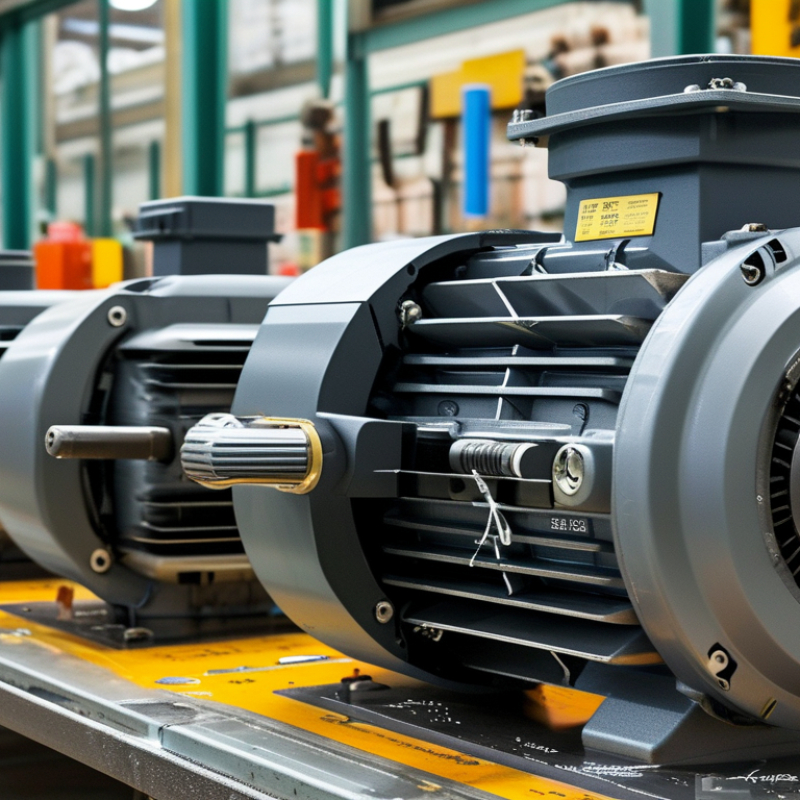
How to Source Industrial Motors from China Top Buyers Guide

Define Motor Specifications and Project Requirements

Before contacting Chinese motor suppliers, convert the application into measurable requirements. Record load torque, shaft speed, starting frequency, operating hours, and duty cycle. A conveyor running eight hours daily needs different thermal capacity than an intermittently used pump. State the required output power, rated voltage, frequency, phase, and control method. Include acceleration time and acceptable speed variation.

Mechanical details often cause avoidable delays. Specify mounting position, flange or foot dimensions, shaft diameter, keyway size, and rotation direction. Check the available space around the motor, not just its nameplate size. Describe the environment clearly: dust, moisture, ambient temperature, altitude, washdown exposure, and corrosive vapors. Select the enclosure and protection level from these conditions, rather than choosing a familiar option.

During factory discussions, request drawings, efficiency data, insulation class, bearing information, and routine test records. Ask how the supplier verifies vibration, noise, temperature rise, and dimensional accuracy. In my experience, a small mismatch in shaft length can stop installation, even when the electrical data is correct. That detail is easy to miss. A written specification sheet reduces interpretation errors between engineering and purchasing teams. Still, review every assumption with the maintenance team; the first draft is rarely perfect. Include required certificates, inspection points, packaging details, spare parts, and commissioning support before comparing quotations.

How to Source Industrial Motors from China: Define Motor Specifications and Project Requirements

The chart shows estimated full-load current for common three-phase induction motor power ratings at 400 V, 50 Hz. Values are calculated using an assumed efficiency of 90% and power factor of 0.85. When requesting quotations, confirm the required power, voltage, frequency, efficiency class, enclosure rating, mounting method, duty cycle, starting method, and environmental conditions.

Evaluate Chinese Motor Manufacturers and Product Capabilities

Evaluating Chinese motor manufacturers requires more than comparing quoted prices. The International Energy Agency reports that electric motor systems use roughly half of global electricity. Efficiency should therefore lead the assessment. Ask manufacturers to provide tested efficiency curves, not only catalogue ratings. Check compliance with IEC 60034-30-1 efficiency classes and IEC 60034-2-1 test methods. A factory claiming IE4 capability should show laboratory reports, dynamometer records, and serial-number traceability.

Look closely at production evidence. Can the supplier balance rotors dynamically? Can it control winding temperature, insulation quality, bearing clearance, and vibration during routine inspection? Request sample units tested at rated load, overload, start-up, and variable-frequency operation. The U.S. Department of Energy notes that properly selected motor systems can deliver substantial energy savings, but field performance depends on controls, loading, and maintenance. The brochure rarely tells the whole story.

Factory audits should review incoming-material records, calibration certificates, corrective-action logs, and final-test data. Export experience matters, yet it does not replace engineering verification. Ask for drawings, tolerance limits, protection ratings, noise data, and spare-parts plans. A spreadsheet can still miss weak process control. Some suppliers may provide impressive samples while relying on inconsistent subcontracting later. That risk deserves a production-run audit. Do not approve a manufacturer until test results match the purchased specification, including voltage, frequency, duty cycle, ambient temperature, and installation conditions.

How to Source Industrial Motors from China: Top Buyers Guide — Evaluate Chinese Motor Manufacturers and Product Capabilities

A practical comparison framework for reviewing motor specifications, manufacturing capability, compliance documentation, quality controls, and total sourcing risk.

Evaluation Dimension Common Industrial Data Relevant Standard or Requirement What Buyers Should Verify Recommended Evidence
Motor Type Three-phase squirrel-cage induction motors are widely used for pumps, fans, compressors, conveyors, and machine tools. IEC 60034 series; local electrical and safety requirements in the destination market. Confirm whether the application requires an induction motor, permanent-magnet motor, brake motor, explosion-protected motor, or another design. Technical datasheet, sectional drawing, operating principle, and application reference list without confidential customer information.
Output Power Common low-voltage industrial ranges include approximately 0.12 kW to 1,000 kW, depending on frame size, cooling method, and voltage. Rated output should be declared according to the applicable IEC 60034 requirements. Check continuous rated power, service factor, load profile, starting frequency, acceleration time, and overload requirements. Rated-output table, nameplate sample, test report, and motor performance curve.
Supply Voltage and Frequency Typical industrial supplies include 220–240 V, 380–415 V, and 440–480 V at 50 or 60 Hz. Exact combinations must be specified by the buyer. The motor nameplate and test conditions should identify rated voltage, frequency, current, connection, and permissible tolerance. Confirm voltage compatibility, star-delta connection, dual-frequency operation, voltage tolerance, and suitability for generator or inverter power. Nameplate layout, wiring diagram, routine test record, and written confirmation of the required voltage-frequency combination.
Efficiency Class IEC efficiency classes for line-operated AC motors include IE1, IE2, IE3, IE4, and IE5. Actual efficiency varies with power, speed, frequency, and design. IEC 60034-30-1 defines efficiency classes for many line-operated AC motors; regional minimum-efficiency rules may also apply. Compare efficiency at 50%, 75%, and 100% load where available. Check whether the declared class applies to the exact motor configuration. Efficiency test report, loss breakdown, efficiency map, and declaration of conformity to the applicable market regulation.
Speed and Pole Configuration Common nominal speeds at 50 Hz are approximately 750, 1,000, 1,500, and 3,000 rpm for 8-, 6-, 4-, and 2-pole induction motors; actual speed is lower because of slip. Rated speed should be measured and reported under the specified rated load and frequency. Match speed-torque characteristics to the driven equipment. Verify starting torque, pull-up torque, breakdown torque, and operating speed range. Torque-speed curve, speed tolerance, inertia data, and test results at rated operating conditions.
Ingress Protection IP55 is common for general indoor industrial motors. Higher protection, such as IP56 or IP66, may be required for washdown, outdoor, dusty, or wet environments. IEC 60034-5 classifies degrees of protection provided by rotating electrical machines. Confirm protection against dust, water jets, temporary immersion, shaft seals, drain plugs, and enclosure design for the actual installation. IP test report, enclosure drawing, seal specification, and installation instructions.
Cooling Method IC411, using a totally enclosed fan-cooled construction, is widely used for standard industrial motors. Other cooling methods may be needed for low-noise, high-temperature, or variable-speed applications. IEC 60034-6 identifies cooling methods for rotating electrical machines. Check fan material, airflow direction, ambient temperature, altitude, cooling clearance, and whether independent forced ventilation is required. Cooling-code declaration, thermal test report, fan drawing, and derating chart for temperature and altitude.
Insulation and Temperature Rise Class F insulation is common in industrial motors; the permitted temperature rise depends on the insulation system, test method, ambient temperature, and service conditions. IEC 60034-1 covers rating and performance requirements, including temperature-rise considerations. Verify insulation system, winding-wire quality, thermal protection, ambient temperature rating, altitude correction, and resistance to moisture. Insulation-system specification, surge test record, winding resistance data, thermal test report, and material traceability.
Variable-Frequency Drive Compatibility Inverter-fed motors may require reinforced insulation, suitable bearings, improved cooling, and a defined speed range. IEC 60034-17 and IEC 60034-25 provide guidance and requirements related to converter-fed motors. Confirm allowable frequency range, constant-torque or variable-torque operation, minimum speed, maximum speed, bearing-current protection, and cable requirements. VFD operating envelope, dV/dt withstand information, bearing arrangement, thermal derating chart, and system test results.
Mechanical Mounting Common configurations include foot-mounted, flange-mounted, and combined foot-and-flange-mounted designs. Frame size and shaft dimensions must match the driven machine. IEC 60072 specifies standardized dimensions and output ratings for certain rotating electrical machines. Check frame size, shaft diameter, shaft extension, keyway, mounting-hole pattern, center height, tolerances, and coupling compatibility. Certified dimensional drawing, shaft-tolerance report, mounting drawing, and inspection measurements from sample units.
Bearings and Lubrication Deep-groove ball bearings are common for smaller and medium motors; larger or heavily loaded motors may use roller or other bearing arrangements. Bearing selection should correspond to radial load, axial load, speed, temperature, and expected service life. Verify bearing type, calculated L10 life, grease specification, relubrication interval, shaft-current risk, and replacement availability. Bearing schedule, lubrication chart, bearing-life calculation, incoming inspection record, and spare-parts list.
Noise and Vibration Noise and vibration depend on power, speed, balance quality, cooling fan, bearings, installation, and foundation rigidity. IEC 60034-14 addresses mechanical vibration of certain rotating electrical machines; ISO 21940 is relevant to rotor balancing. Specify the measurement method, load condition, speed, acceptance limits, balancing grade, and foundation requirements. Vibration test record, noise test method, rotor-balance report, and factory acceptance test procedure.
Hazardous-Area Capability Motors for flammable gas, vapor, dust, or explosive atmospheres require a certified protection concept and clearly defined hazardous-area classification. IEC 60079 series and the applicable destination-market certification system may apply. Confirm zone or division, gas or dust group, temperature class, equipment protection level, ambient range, cable entries, and certification validity. Current third-party certificate, certificate schedule, marking label, instruction manual, and production-site authorization where required.
Quality Management A documented quality system should control design changes, incoming materials, winding processes, assembly, testing, calibration, and corrective actions. ISO 9001 certification is useful evidence of a quality-management system but does not by itself prove product performance. Check certificate scope, issuing body, validity, production-site address, process controls, nonconformance handling, and audit history. Valid certificate, process flow chart, control plan, calibration records, internal audit summary, and corrective-action samples.
Routine and Type Testing Routine checks commonly include winding resistance, insulation resistance, dielectric withstand, no-load current, rotation, and basic vibration checks. Test scope should follow the applicable motor standard, purchase specification, and agreed inspection plan. Separate routine tests from type or design-verification tests. Confirm test equipment capability, calibration status, sampling plan, and report traceability. Factory test report, calibration certificate, inspection and test plan, sample report, and independent pre-shipment inspection results.
Customization Capability Common options include special voltage, brake, encoder, heater, thermistor, thermal switch, stainless-steel hardware, modified shaft, and special paint. Any modification should remain compatible with the applicable electrical, mechanical, safety, and efficiency requirements. Evaluate engineering response time, drawing approval process, prototype control, change management, and repeatability between batches. Approved drawings, engineering-change procedure, prototype test report, bill of materials, and first-article inspection record.
Export Packaging Industrial motors should be protected against impact, corrosion, moisture, shaft movement, and improper lifting during international transportation. Packaging should follow the transport mode, destination climate, handling conditions, and applicable wood-packaging rules. Confirm moisture barrier, desiccant, corrosion protection, lifting points, shock resistance, crate strength, package dimensions, and shipping marks. Packaging specification, packing photographs, drop or vibration test evidence where applicable, and final packing list.
Commercial and After-Sales Risk Total cost includes product price, tooling, testing, freight, duties, spare parts, commissioning, energy consumption, and warranty exposure. Warranty terms and delivery conditions should be written into the purchase contract and technical agreement. Compare lead time, payment terms, warranty duration, failure-response time, spare-parts support, documentation language, and replacement policy. Signed quotation, technical agreement, warranty statement, service-level commitment, approved spare-parts list, and milestone inspection plan.
Buyer note: The numerical ranges above are common industrial reference points rather than quotations or guarantees. Final acceptance should be based on the exact motor rating, operating environment, destination-market regulations, approved drawings, and verified test documentation.

Verify Supplier Credentials, Quality Systems, and Certifications

When sourcing industrial motors from China, supplier credentials deserve the same attention as price. Request the company’s registered business information, factory address, export history, and named quality manager. Verify these details through official records and independent references. A trading office may offer useful services, but it should clearly identify the actual manufacturer.

Ask for evidence of a working quality system, not only a certificate file. An ISO 9001 certificate should match the factory’s legal name, address, and approved scope. Check its validity with the issuing certification body. Review incoming-material inspections, winding records, insulation-resistance tests, vibration checks, and final load-test reports. Calibration records matter too. Ask how each motor’s serial number connects to test data and production staff.

Certification requirements depend on the destination market and motor application. Confirm applicable electrical, safety, efficiency, and environmental standards with a qualified specialist. Do not accept copied declarations or outdated reports. During a factory audit, compare the documents with physical practice. Are rejected windings separated? Are test instruments labeled? Can workers explain the inspection steps?

Small details reveal discipline. Very small details. I once trusted a neat test sheet without checking its raw measurements. That was careless. A sample performed well, yet the supplier could not explain its traceability process. Recheck samples under realistic voltage, load, temperature, and duty conditions. Independent laboratory testing may cost more, but it can expose weaknesses before a full production order.

Compare Pricing, Contracts, Shipping, and Import Responsibilities

When sourcing industrial motors from China, compare more than the unit price. Request identical specifications, such as 15 kW power, 400 V voltage, 50 Hz frequency, insulation class, and IP rating. A lower quotation may exclude testing, export packaging, spare parts, or technical documents. Ask for a cost breakdown and confirm whether prices cover sample approval and production inspection. Contract terms should state tolerances, delivery dates, warranty duration, payment stages, and remedies for nonconforming motors. Vague wording creates expensive disputes.

Shipping decisions also change the real landed cost. Compare air freight, sea freight, and consolidated shipments based on weight, urgency, and damage risk. A motor packed in a reinforced wooden crate needs different handling from a small spare unit. Clearly identify who arranges export clearance, freight booking, cargo insurance, import clearance, duties, and inland delivery. Use a suitable Incoterm, but verify its meaning with a qualified freight forwarder or customs broker. Import duties and electrical requirements vary by destination.

Tips: Build a comparison sheet with product, contract, shipping, and import columns. Request a pre-shipment inspection with photographs, test records, serial numbers, and crate dimensions. Check the commercial invoice and packing list before dispatch. Small errors matter. I would not rely on a supplier’s standard contract alone; it may protect the seller more than the buyer. Also, do not assume the cheapest freight option is safest. A delayed motor can cost more than premium transport.

Inspect, Test, and Manage Industrial Motor Delivery Performance

Industrial motor sourcing does not end when the supplier sends a shipping notice. Delivery performance depends on controlled inspection, repeatable testing, and clear records. Before dispatch, verify the nameplate, frame size, voltage, frequency, protection rating, and shaft dimensions against the approved specification. Photograph each motor from several angles. Record serial numbers and packing conditions.

Test results should be measurable, not vague. Check winding resistance, insulation resistance, rotation direction, vibration, and no-load current. For larger motors, request a witnessed load test or a certified test report. Compare readings with the agreed acceptance limits. A clean factory floor does not prove reliable performance. Numbers matter more.

Tips Use a shipment checklist with signed inspection points. Ask for carton photos before loading. Match serial numbers with test reports. Track promised date, actual dispatch date, arrival date, and any delay reason. Keep one communication channel for changes.

Packaging also deserves close attention. Moisture barriers, shaft protection, lifting marks, and shock indicators can prevent expensive surprises. On arrival, inspect for dents, corrosion, loose terminals, and water damage before signing delivery documents. One missed photograph can weaken a later claim. I have seen teams focus heavily on factory testing and overlook port delays. That is a planning mistake worth reviewing. Add buffer time, but do not hide poor supplier performance behind it.

FAQS

What should buyers evaluate before choosing an industrial motor manufacturer?

Compare efficiency, testing ability, production controls, traceability, and service support.

Which efficiency evidence should a supplier provide?

Request tested efficiency curves, laboratory reports, dynamometer records, and serial-number traceability.

What production details deserve close inspection?

Review rotor balancing, winding temperature control, insulation quality, bearing clearance, and vibration checks.

How can buyers verify a supplier’s quality system?

Check registered details, factory location, quality responsibilities, inspection records, and calibration certificates.

What should a factory audit examine?

Inspect incoming materials, rejected windings, test instruments, corrective actions, and final load-test records.

How should motor samples be tested?

Test samples at rated load, overload, startup, and variable-frequency conditions.

What information should be checked before shipment?

Match the nameplate, frame size, voltage, frequency, protection rating, shaft dimensions, and serial numbers.

How can buyers reduce delivery and packaging risks?

Request carton photographs, moisture barriers, shaft protection, lifting marks, and shock indicators.

Why is independent testing sometimes necessary?

Independent testing can reveal weak performance before a large production order.

What common sourcing mistake should buyers reconsider?

Trusting a clean factory or neat test sheet without checking raw measurements can be misleading.

Conclusion

Learning how to source industrial motors from China requires a structured process that begins with clearly defining motor specifications and project requirements. Buyers should identify power ratings, voltage, frequency, efficiency class, enclosure type, operating conditions, installation dimensions, and expected service life. This information helps narrow the supplier pool and ensures that proposed products match the application. Chinese manufacturers should then be evaluated according to their production capabilities, engineering expertise, customization capacity, quality systems, certifications, and experience with similar industrial projects.

A successful sourcing plan also includes checking supplier credentials, reviewing technical documents, comparing quotations, and carefully clarifying contracts, payment terms, warranties, lead times, packaging, shipping arrangements, customs responsibilities, and import costs. Before shipment, buyers should establish inspection and testing procedures covering materials, workmanship, performance, noise, vibration, insulation, and load operation. Clear acceptance standards, progress monitoring, and communication throughout production can reduce delivery risks and improve long-term motor reliability.

Sienna

Sienna

Sienna is a skilled marketing professional with a deep expertise in our company’s core products and services. With a passion for innovation and detail, she plays a pivotal role in crafting insightful blog posts that not only highlight the unique features of our offerings but also provide valuable......